
K-35 One-Step Fiber Cleaver: One Press, One Clean Cut
November 12, 2026
Every fusion splice starts with a cleave, and every cleave decides the splice. A flat, clean end face at a right angle to the fiber axis is what lets a splicer do its work; a chipped or angled face forces re-cleaves, costs time, and shows up later as splice loss. For FTTH crews cleaving dozens of fibers a day, the tool that makes that cut is not a minor accessory — it is the tool the whole job depends on.
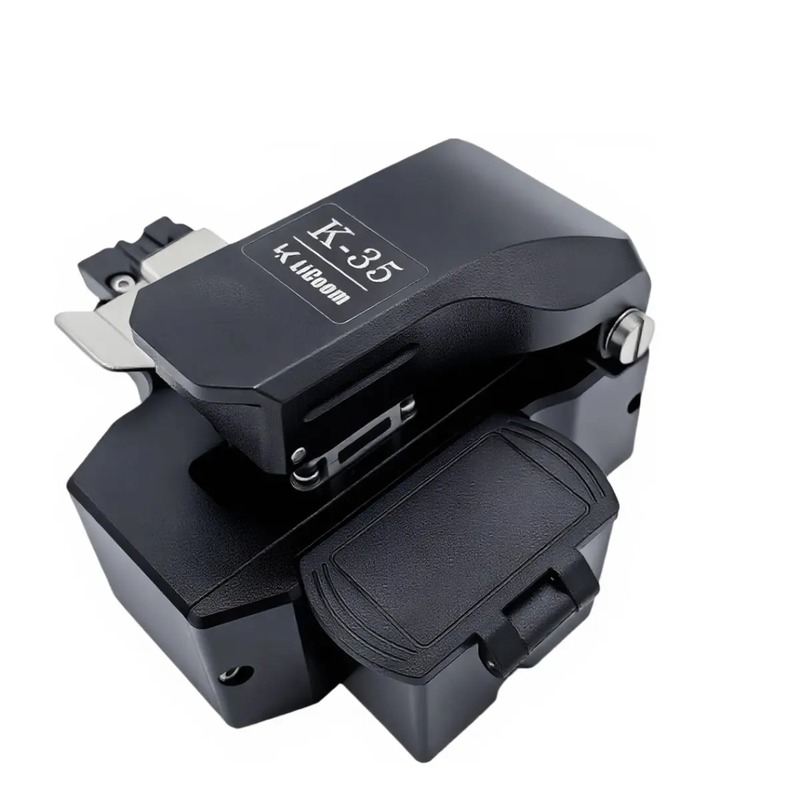
The K-35 one-step fiber cleaver is Likumu's flagship cleaver, built around a simple idea: one pressing motion completes the cleave. No separate scoring step, no separate breaking step, no technique to vary from technician to technician. Likumu — The Source of Precision: precision fiber optic tools, built for installers who measure in microns. This guide explains what the K-35 does, where it earns its place in a crew's kit, and how to keep it cutting cleanly for tens of thousands of cleaves.
What "one-step" actually means
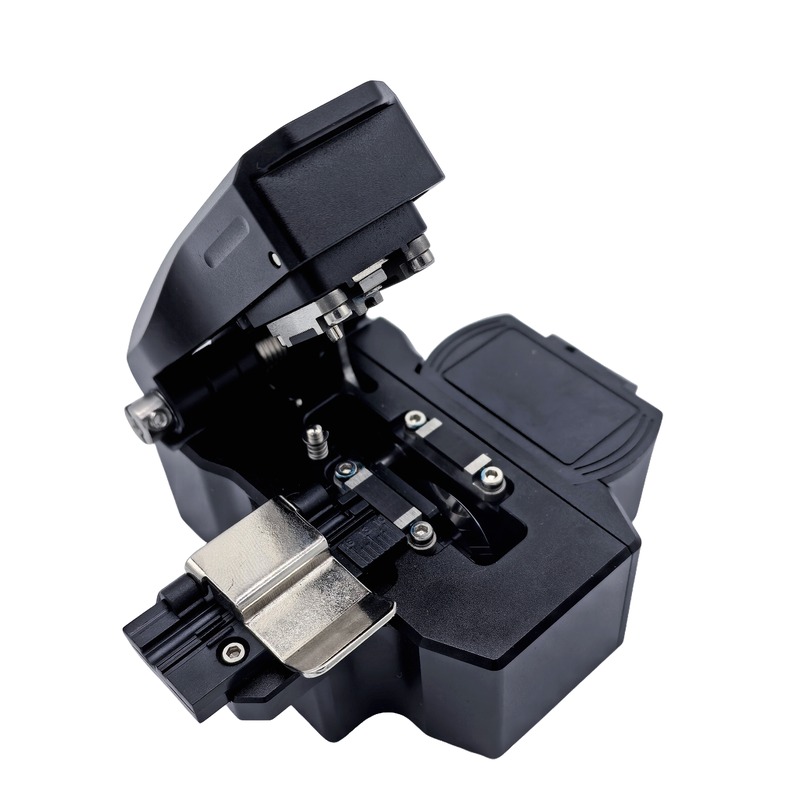
Traditional cleavers separate the work: load and clamp the fiber, score it, break it, then clear the offcut. The K-35 combines scoring and breaking into a single closing action. One press, and the fiber is cleaved. The mechanism rebounds automatically, ready for the next fiber.
In practice that changes three things on a job:
- Speed on repetitive work. FTTH drop work is dozens of identical cleaves. Fewer hand movements per cleave adds up across a day of terminations.
- Consistency between technicians. There is less technique to vary, so the fifth cleave of the day looks like the fiftieth, whoever is holding the tool.
- Fewer mistakes under pressure. On a ladder, in a cabinet, or at a customer wall box, a single action is easier to get right than a sequence.
One-step operation does not remove the need for correct fiber preparation. The fiber still has to be stripped cleanly, cleaned, and seated correctly in the fixture at the right cleave length for the splicer or connector. If cleave quality drops, check the full prep cycle before blaming the cleaver: stripping damage and contamination cause as many bad cleaves as the tool itself.
Single fiber and ribbon fiber, 1–12 fibers
The K-35 is an upgraded one-step model that cuts single fibers and ribbon fiber of 1–12 fibers, combining one-action convenience with the robustness of a traditional high-precision cleaver. A crew that moves between single-fiber drops and ribbon work does not need a second cleaver for the ribbon jobs.
The specification, in full
| Item | K-35 |
|---|---|
| Bare fiber diameter | 125 μm |
| Coating diameter | 0.25 / 0.9 / 3.0 mm |
| Fiber type | Single fiber and ribbon fiber (1–12 fibers) |
| Cleave length | 9–16 mm |
| Cleave angle | ≤ 0.5° |
| Blade | Tungsten steel |
| Blade life | 24 positions × 2,000+ cleaves per position — over 48,000 cleaves per blade |
| Dimensions | 76 × 85 × 53 mm |
| Weight | Approx. 220 g |
| Body | Aluminum alloy, CNC machining, corrosion-resistant |
At 76 × 85 × 53 mm and about 220 g, the K-35 sits in the hand and the pouch without demanding its own case. The aluminum-alloy body is CNC-machined and corrosion-resistant — a rigid base that keeps the scoring action consistent after months of field use, not just on the first day.
Blade life: use all 24 positions
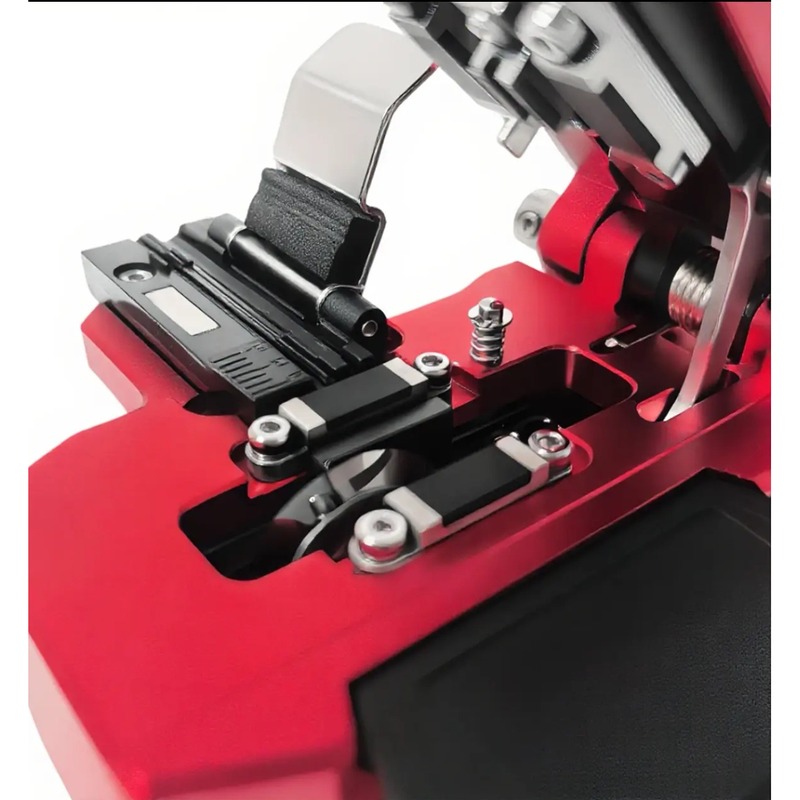
The tungsten steel blade is rated for over 48,000 cleaves — but only if crews use the whole blade. The blade has 24 positions, each good for 2,000 or more cleaves. A blade left on one position will fail early at that spot while the rest of the edge is still good.
Build rotation into a routine — for example at a fixed cleave count or at the start of a new project — rather than waiting for splice quality to collapse mid-job. The warning signs of a worn position are rising cleave angles, more frequent chips and hackles, and a splicer that suddenly needs more re-cleaves. Rotate first; replace the blade when rotation no longer restores quality. Keep replacement blades matched to the K-35 in the kit or van stock, and tell your supplier the cleaver model so the right blade type is matched — blades are not universal.
Built for the field, not the bench
Field cleavers get dropped, knocked, and used on uneven surfaces. Three details matter on the fiftieth cleave of the day:
- It sits flat and stable. A rigid alloy body on a cabinet shelf or splice tray table keeps the scoring action repeatable.
- Offcuts are contained. The K-35 has a waste fiber box that collects the broken fiber offcuts. Broken fiber offcuts are very fine and sharp — they should never be left on a work surface or on the floor, and they must be kept away from skin and eyes.
- It is simple to operate. Load, press, done. There is no multi-step sequence to teach a new technician or to forget under time pressure.
Care and safety
The K-35 is a precision mechanism. Six rules from the manual keep it working and keep the crew safe:
- Do not disassemble the unit or add oil — this may cause malfunctions.
- The blade is a precision mechanism: do not strike it or drop the unit. Impact affects blade stability and lifespan and can cause injury.
- Broken fiber offcuts are very fine and sharp — keep them away from skin and eyes.
- The blade is extremely sharp — never touch it directly with your hands.
- After cleaving, clear fiber debris from the body and store the cleaver in its packaging box.
- If any mechanical abnormality or fault occurs, stop using the unit at once. Do not disassemble it yourself — contact after-sales service or the manufacturer.
Colors and customization
The K-35 is supplied in black and grey as standard. Other colors and the customer's logo can be customized — the cleaver is the one model in the range that carries the Likumu mark, and it can also be supplied to carry a customer's own brand.
Who the K-35 is for
The K-35 fits any crew where cleaving is daily work and consistency matters more than a second tool:
- FTTH installation crews doing drop terminations all day, where one-step speed and repeatability pay off directly.
- Contractors and splicing teams that need ribbon capability without carrying a separate ribbon cleaver.
- Distributors and brand owners looking for a flagship cleaver to anchor a fiber tool range — available with custom colors and logo.
If your work is occasional mechanical termination rather than daily fusion splicing, a simpler field cleaver may be the proportionate choice — see how to choose a fiber cleaver for the full comparison. But when the cleave decides the splice, and the splice decides the job, the K-35 is the tool built for that responsibility.
Questions about the K-35, custom colors, or logo customization? Contact us at [email protected] or on WhatsApp at +86 150 6823 2998. Browse the full range in fiber cleavers.